

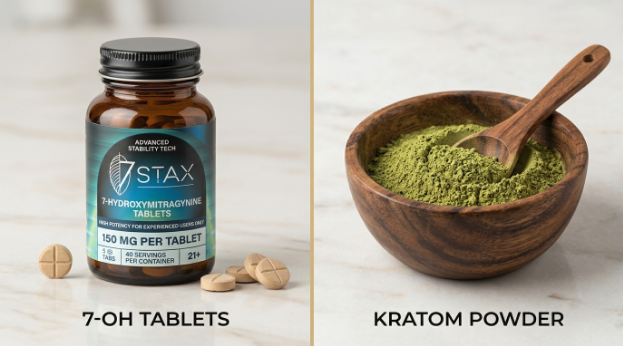
Kratom powder has been the classic format for years. Bags of ground leaf sitting on a shelf, ready to scoop into a drink or capsule. In the last few years, a newer format has crowded the top of most product pages: pressed 7-OH tablets. Both come from the same plant. Both target the same alkaloids. Yet the two formats deliver very different experiences, cost profiles, and daily conveniences.
This guide breaks down the real value comparison between powder and 7Stax pressed 7-OH tablets. If you are stuck deciding which format deserves your next order, this is the honest breakdown you need.
What Kratom Powder Actually Is?
Kratom powder is the ground leaf of the Mitragyna speciosa tree. Bags typically contain dozens of alkaloids, with mitragynine leading the pack at sixty to seventy percent of the total profile. 7-hydroxymitragynine, the compound most modern tablets focus on, sits at less than two percent of the natural leaf.
Because the leaf contains many compounds in varying ratios, powder delivers a broad, complex effect that many long-time users appreciate. The trade-off is that the exact strength of any single scoop is impossible to know without laboratory testing on that specific bag.
What Pressed 7-OH Tablets Actually Are?
Pressed tablets isolate 7-hydroxymitragynine from the leaf, then combine it with food-grade binders and shape it into precise units. Each tablet delivers a known, verified milligram amount of active alkaloid. Modern tablets typically come in strengths of 40mg, 80mg, and 100mg, though brands offer other strengths too.
Because the active compound is isolated and pressed at controlled doses, tablets deliver a much more predictable experience. One tablet equals one known dose. No measuring, no guessing, no variation between servings.
Potency Compared Side by Side
Potency is where powder and tablets diverge most sharply. Raw powder requires substantial servings to reach a strong session, typically two to six grams. Pressed 7-OH tablets deliver a similarly strong effect from as little as 40 to 100 milligrams because the active alkaloid is far more concentrated.
A moderate powder serving: three grams of leaf, containing a rough estimate of alkaloid content
A moderate tablet serving: one 80mg pressed tablet, containing verified isolated 7-OH
The mismatch in weight is enormous. Tablets deliver equal or stronger effects at a fraction of the material weight. That difference has implications for cost, storage, and daily convenience.
Onset and Effect Curve
Powder onset takes thirty to forty five minutes because the body has to process the leaf, break it down, and metabolize mitragynine into 7-OH before the peak lands. The curve is broad, and the come-down is gentle.
Tablet onset is faster, usually fifteen to thirty minutes, because the isolated 7-OH bypasses the metabolic conversion. The peak is sharper and more defined. The come-down is smoother than users often expect.
Neither is universally better. Powder favors slow, all-day sessions. Tablets favor focused, defined sessions with a clear beginning and end.
Cost Per Effective Session
This is where new buyers often get the value equation wrong. A bag of powder looks cheaper than a bottle of tablets on the sticker price. The real cost is measured per session, not per bag.
A three-gram powder serving typically costs one to three dollars depending on the vendor. A single 80mg tablet from a premium brand also lands in a similar range on smaller bottle purchases. On a bulk pack, however, the per-tablet cost drops sharply. Users who buy the 40,000mg bulk pack from 7Stax often end up paying less per effective session than they did on comparable powder orders.
The other cost is time. Measuring powder, brewing tea, or filling capsules takes real minutes every day. Tablets eliminate that friction entirely. Time savings compound over months.
Convenience and Daily Use
Powder has to be measured, mixed, and often washed down with an unfamiliar taste. Toss and wash. Tea. Yogurt blend. Every method involves some workflow. Tablets remove all of that. Open the bottle, take the tablet, done.
Storage is easier too. A single tablet bottle takes up far less space than several bags of powder. Tablets travel better, do not spill, and do not stain surfaces.
Shelf Life and Product Stability
Kratom powder loses potency over time. Exposure to light, air, and heat gradually shifts the alkaloid profile. Once a bag is opened, the timer speeds up. Users often notice their powder feels weaker after several months even when it looks fine.
Pressed tablets are far more stable in a sealed bottle stored in a cool, dry place. Potency holds for the full shelf life on the label. That stability protects the value of larger purchases and reduces waste.
Lab Testing and Quality Control
Testing exists in both categories, but the results mean different things. A lab panel on kratom powder covers the batch of powder. That is useful, but batch variability within a single bag can still exist because of natural variation in the leaf.
A lab panel on pressed tablets covers finished tablets. The dose you swallow matches what the panel measured. That tighter link between testing and product is one of the most important reasons buyers switch to tablets and stay switched.
When Powder Still Makes Sense?
Powder still has a place, even if tablets take most of the modern market. Long-time users who enjoy the ritual, appreciate the broad effect of the whole leaf, or blend strains to fine-tune their session often keep powder as their primary format.
- You enjoy brewing tea or crafting a slow morning ritual
- You prefer the wider alkaloid profile of the full leaf
- You want maximum flexibility to adjust servings on the fly
- For these users, powder is not just a format. It is part of the experience.
- When Tablets Are the Smarter Value
- You want accurate, predictable dosing
- You dislike measuring, brewing, or dealing with plant material
- You value clean storage and travel-friendly formats
- You want the lowest cost per session, especially through bulk buying
- You care about tight quality control on the finished product
Frequently Asked Questions
Are tablets stronger than powder?
Tablets deliver a much higher concentration of 7-hydroxymitragynine per milligram. A single tablet often produces effects comparable to several grams of powder because of the isolated compound.
Can I switch from powder to tablets without adjusting?
No. Because tablets are far more concentrated, start with a lower strength like 40mg or 80mg and see how your body responds before working up. Never assume a powder-to-tablet dose is one to one.
Which format is safer?
Both are safe when sourced from tested, reputable brands and used responsibly. Buy from vendors that publish current lab panels, avoid combining with alcohol or sedatives, and respect the dosing guidance on the label.
Which format lasts longer per bottle?
It depends on how much you use per session. A bulk tablet pack can cover months of regular use at the lowest per-tablet cost. A powder bag runs out faster because each session uses several grams.
The Final Verdict
For most modern users, tablets deliver better overall value. The precision dosing, faster onset, smaller form factor, cleaner storage, and lower per-session cost on bulk packs stack up in favor of the pressed format. Powder still has a loyal audience, and that audience has good reasons for staying, but the trend line is clear.
If you have not tried tablets yet, a small bottle is the safest way to see the difference for yourself. Once you have a baseline experience with a single tablet, you can decide whether the bulk pack makes sense for your routine. Most buyers find the answer is yes, and the switch pays off quickly.